

What We Get Wrong About Raising Emotionally Healthy Kids
By now, most of us have heard the statistics about youth mental health. The numbers are hard to ignore. According to the CDC’s Youth Risk
Explore our growing collection of podcast interviews, expert conversations, and parenting tools designed to help you build a strong family culture—one moment, one value, one decision at a time.
Published July, 1, 2026, by Jenny Grant Rankin, phd
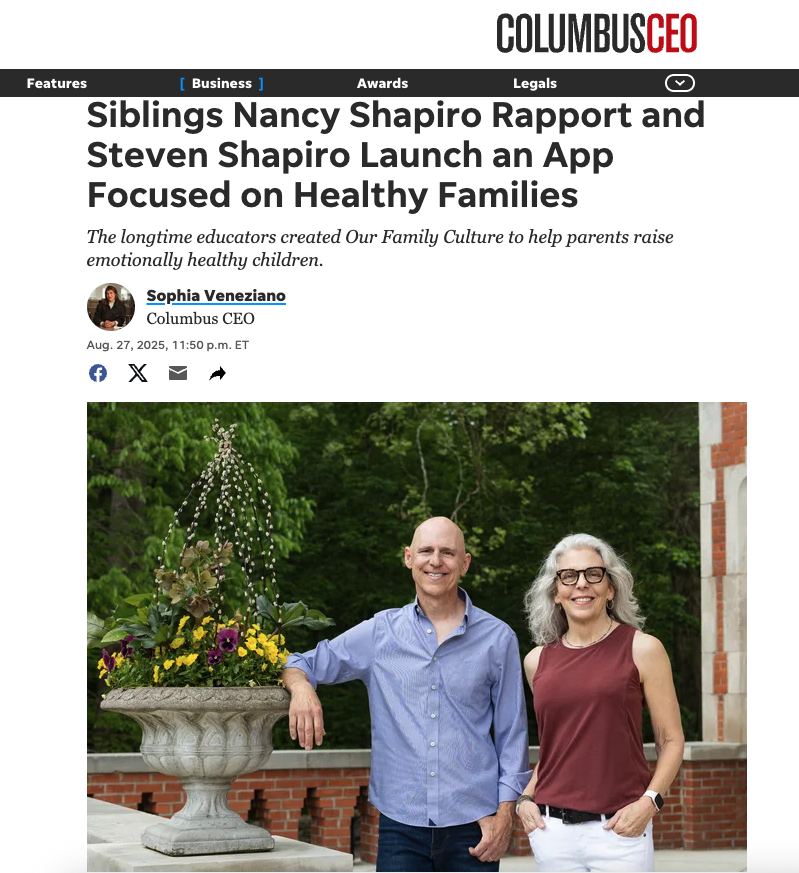
An interview with OFC cofounders Steven Shapiro and Nancy Shapiro Rapport, who serve alongside Rankin on the publication's Board of Advisors, exploring how intentional family culture helps kids withstand pressure from social media influencers and AI companions. The piece cites recent research: nearly half of teens now see social media as having a mostly negative effect (up from 32 percent in 2022), one in three kids already use AI for social and emotional support, and heavy screen time correlates with higher anxiety and depression rates. Steven and Nancy lay out their three-step framework for building family culture: identifying core values, translating them into behavior-based language (drawing on David Friedman's "Fundamentals System"), and practicing consistently through small daily moments. They argue that this work strengthens the parent-child relationship so kids turn to parents first, not last, when they encounter difficult content online.


By now, most of us have heard the statistics about youth mental health. The numbers are hard to ignore. According to the CDC’s Youth Risk

Here’s something I’ve observed after 34 years in education: the kids who thrive, not just academically, but socially, emotionally, and in life after school, almost

“It’s easier to build strong children than to repair broken adults.” — Frederick Douglass Because you only get one chance to raise amazing kids. You